





How Does Mortgage Work in Dubai?
Modified: September 22, 2025
•
5 mins read
Buying a property in Dubai is an exciting milestone, but it often requires financial support in the form of a mortgage. For many first-time buyers and even seasoned investors, one of the most common questions is: how does mortgage work in Dubai? Understanding this process is crucial to making informed decisions and ensuring your property purchase goes smoothly.
In this article, we’ll break down the basics of mortgages, explain how they work in Dubai, and provide practical insights to help you navigate the system confidently.
What Is a Mortgage?
At its core, a mortgage is a loan provided by a bank or financial institution to help you buy a property. Instead of paying the entire purchase price upfront, you borrow a portion and repay it in monthly installments over an agreed term. The property itself serves as collateral for the loan.
When people ask how does mortgage work, it’s essentially about understanding this partnership: you own the property while the bank secures its interest until the loan is fully repaid.
How Does Mortgage Work in Dubai Specifically?
The UAE mortgage system operates under specific regulations set by the Central Bank of the UAE and varies slightly for residents and non-residents. Here’s an overview of how mortgages work in Dubai:
- •Loan-to-Value (LTV) Ratio:
- -UAE residents buying their first home can typically borrow up to 80% of the property value.
- -Non-residents are usually eligible for 60–65%.
- -UAE residents buying their first home can typically borrow up to 80% of the property value.
- •Down Payment:
Buyers must contribute the remaining percentage as a down payment, which is a legal requirement. - •Mortgage Registration:
Mortgages must be registered with the Dubai Land Department (DLD), which charges a registration fee of 0.25% of the loan amount plus admin charges. - •Repayment Term:
Mortgages in Dubai typically range from 5 to 25 years, depending on the lender and borrower profile. - •Interest Rates:
Options include fixed and variable rates. Fixed rates provide stability for a set period, while variable rates fluctuate with the EIBOR (Emirates Interbank Offered Rate).
Key Steps in the Mortgage Process
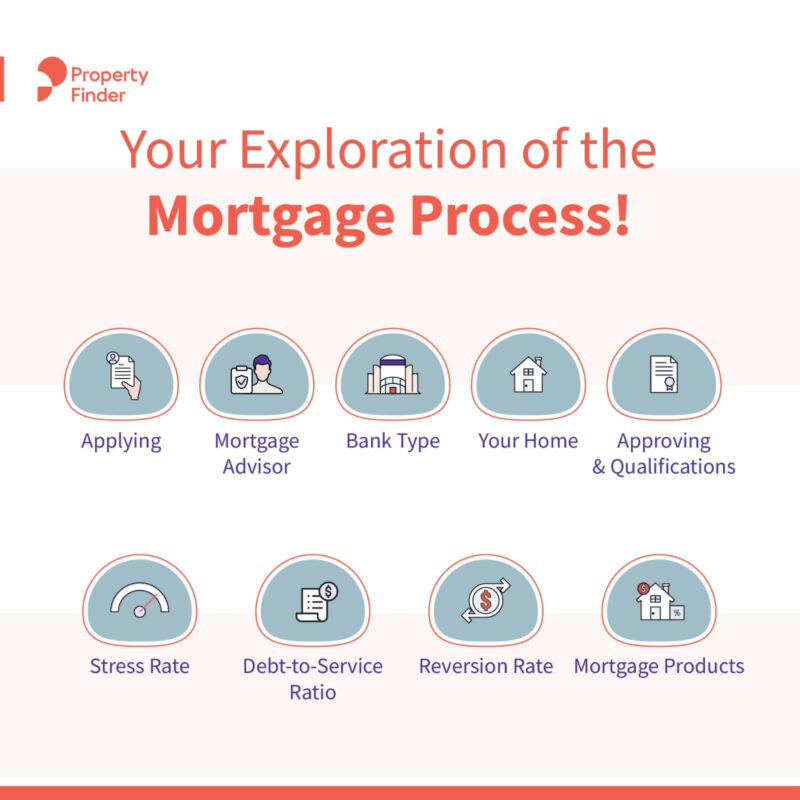
Many buyers wonder not only how does mortgage work but also what steps are involved. Here’s a simple breakdown:
- Mortgage Pre-Approval
- •Before property hunting, it’s wise to get pre-approved. This confirms how much you can borrow based on your income, liabilities, and credit history.
- •Before property hunting, it’s wise to get pre-approved. This confirms how much you can borrow based on your income, liabilities, and credit history.
- Property Selection
- •Once pre-approved, you can choose a property within your budget.
- •Once pre-approved, you can choose a property within your budget.
- Formal Mortgage Application
- •Submit required documents, including salary certificates, bank statements, Emirates ID, and passport copies.
- •Submit required documents, including salary certificates, bank statements, Emirates ID, and passport copies.
- Valuation
- •The bank arranges a valuation of the property to ensure the price matches market standards.
- •The bank arranges a valuation of the property to ensure the price matches market standards.
- Final Approval & Offer Letter
- •After valuation, the bank issues a formal mortgage offer with terms and conditions.
- •After valuation, the bank issues a formal mortgage offer with terms and conditions.
- Registration with DLD
- •The mortgage is registered with the Dubai Land Department.
- •The mortgage is registered with the Dubai Land Department.
- Disbursement & Handover
- •Funds are transferred to the seller, and you take possession of your new home.
- •Funds are transferred to the seller, and you take possession of your new home.
Types of Mortgages in Dubai
When learning how does mortgage work, it’s important to know that there are different mortgage options available:
- •Fixed-Rate Mortgages – Interest remains the same for a set period, usually 1–5 years.
- •Variable-Rate Mortgages – Rates move in line with the market, offering potential savings but also some risk.
- •Islamic Mortgages – Sharia-compliant financing structures such as Ijara or Murabaha, which do not involve interest.
- •Offset Mortgages – Link your savings account to your mortgage, reducing interest payments.
Costs Involved in Getting a Mortgage
Aside from the down payment, here are the additional costs to expect:
- •Mortgage Registration Fee: 0.25% of the loan amount.
- •Valuation Fee: Usually AED 2,500–3,500 + VAT.
- •Processing Fee: Around 1% of the loan amount.
- •DLD Fees: 4% of the property price (paid by the buyer).
Knowing these costs helps you plan your finances better when asking, how does mortgage work in real terms for buyers?
How Interest Rates Affect Your Mortgage
Interest rates are one of the biggest factors that influence how mortgages work. In Dubai, most lenders link variable rates to the EIBOR, which changes depending on the global and local economic environment.
- •If rates rise, your monthly payments increase.
- •If rates fall, your payments may reduce.
This is why many buyers start with a fixed-rate mortgage for stability before switching to variable later.
Common Questions About How Mortgages Work in Dubai
1. Can expats get a mortgage in Dubai?
Yes, expats can get mortgages, but typically with lower loan-to-value ratios compared to UAE nationals.
2. What documents are required?
Passport, Emirates ID (for residents), salary certificate, bank statements, and property details.
3. Can I repay early?
Yes, but early settlement fees usually apply (1–3% of the outstanding loan).
4. What happens if I miss payments?
The bank has the right to repossess the property if payments are consistently missed.
Summary of Mortgage Basics in Dubai
| Aspect | Details |
| Maximum LTV | 80% for residents, 60–65% for non-residents |
| Down Payment | 20–40% of property value |
| Repayment Term | 5–25 years |
| Mortgage Registration | 0.25% of loan amount (DLD) |
| Common Fees | Processing (1%), valuation (AED 2,500–3,500), DLD (4% of property) |
| Types of Mortgages | Fixed, variable, Islamic, offset |
So, how does mortgage work in Dubai? It’s a regulated and structured process that helps both residents and expats achieve their property ownership goals. By understanding the requirements, costs, and mortgage types, you’ll be well-prepared to make smarter decisions about financing your home.
As most properties in capital cities around the world on average double in value every ten years or so, the purchaser knows that if they can afford to make the repayments for a number of years, there is a good chance that the property will increase in value and that their “equity” within the property (the part in which they own) will increase.
In the UAE the maximum loan term allowed is 25 years for salaried people up to the age of 65 and self employed up to the age of 70. The lengthy term allows mortgage payments to be affordable and manageable. Also see how much can I borrow?
Calculate your mortgage repayments and get pre-approved within 24 hours.
Search over 40,000 properties for sale in the UAE.
Related Articles

Guides & Advice
9 Newly-Listed Best Investment Properties for Sale in Dubai

Guides & Advice